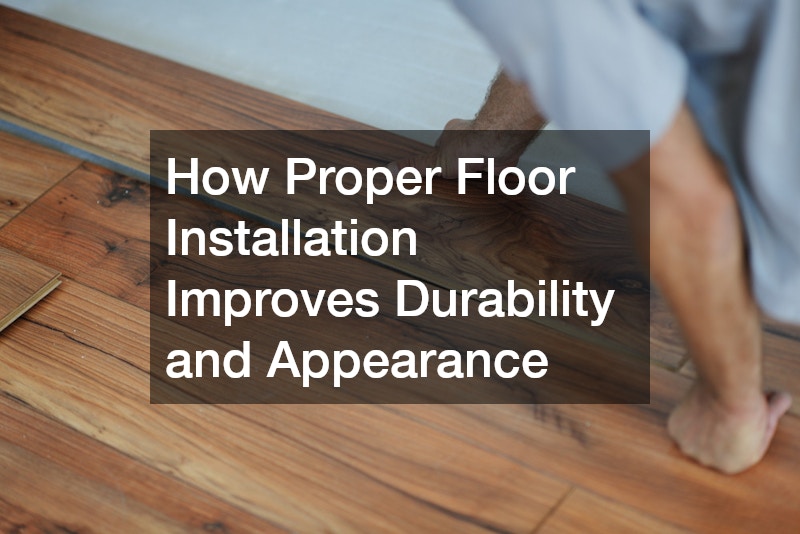
Proper floor installation plays a crucial role in determining both the durability and visual appeal of flooring in residential and commercial spaces. While flooring materials such as hardwood, tile, laminate, and carpet are designed to be strong and attractive, their performance heavily depends on how well they are installed. A professionally installed floor not only enhances the overall look of a space but also ensures long-term structural integrity, reducing the likelihood of premature damage, uneven surfaces, or costly repairs.
Video Source
When installation is done correctly, flooring becomes a lasting investment that supports both function and design.
One of the most significant benefits of professional floor installation is improved durability. Skilled installers understand how to properly prepare subfloors, measure accurately, and secure materials in a way that minimizes movement and wear over time. This prevents common issues such as shifting boards, loose tiles, or bubbling carpets, all of which can shorten the lifespan of flooring.
Another important advantage is the quality of the finished appearance. Professional installers focus on precision, ensuring that seams are aligned, edges are smooth, and transitions between rooms are seamless. These details may seem minor, but they greatly influence the overall aesthetic of a space. A well-installed floor creates a clean, polished look that enhances interior design and gives rooms a more refined feel.
In addition, professional installation can increase property value. Buyers and tenants often view flooring as a major indicator of maintenance and quality within a property. Floors that are evenly installed and visually appealing can make a strong positive impression, potentially increasing market value and speeding up sales or rentals.
Different flooring materials respond differently to installation quality, making proper technique essential for maximizing durability.
Hardwood flooring, for example, requires careful acclimation before installation to adjust to the room’s temperature and humidity. If this step is skipped or improperly handled, the wood may expand or contract after installation, leading to warping, gaps, or buckling. Proper installation ensures correct spacing and secure fastening, which helps maintain stability over time.
Tile flooring depends heavily on a level subfloor and precise adhesive application. If tiles are installed on an uneven surface or with inconsistent bonding, they may crack, loosen, or become uneven. Professional installation ensures proper leveling and strong adhesion, which significantly increases the lifespan of tile surfaces.
Laminate flooring relies on interlocking systems that must be fitted tightly and evenly. Poor installation can cause gaps, lifting edges, or creaking sounds when walked on. When installed correctly, laminate floors remain stable and resistant to everyday wear, maintaining both appearance and functionality.
Carpet installation also requires expertise, particularly in stretching and securing the material properly. If carpet is not installed with the correct tension, it may develop wrinkles, ripples, or uneven wear patterns. Professional installation ensures a smooth, tight fit that enhances both durability and comfort underfoot.
Floor installation has a direct impact on how flooring looks and how easy it is to maintain over time. A properly installed floor creates a uniform surface that enhances the overall appearance of a room. Clean lines, consistent patterns, and smooth transitions between spaces contribute to a more cohesive and attractive interior environment.
Beyond aesthetics, proper installation also simplifies maintenance. Floors that are level and securely fitted are easier to clean because they do not trap dust, dirt, or debris in gaps or uneven spaces. This helps maintain a more hygienic environment and reduces the effort required for routine cleaning.
Additionally, well-installed flooring is less likely to develop long-term issues such as warping, lifting, or cracking, all of which can complicate maintenance and lead to costly repairs. A stable installation helps ensure that the flooring remains in good condition for years with minimal intervention.
Proper floor installation is essential for maximizing both the durability and appearance of flooring materials. When installed correctly, floors are stronger, more stable, and more visually appealing. Each type of flooring—whether hardwood, tile, laminate, or carpet—benefits significantly from professional techniques that ensure proper alignment, secure placement, and long-term performance. Beyond durability, correct installation enhances the overall design of a space and makes ongoing maintenance easier and more effective. Ultimately, investing in proper floor installation provides long-term value, improved aesthetics, and lasting structural reliability for any property.